

Soft Play Equipment: What Buyers Should Check Before They Purchase

Soft play equipment looks simple at first glance, but in a commercial venue it behaves like a high-traffic system. Kids climb, slide, and crawl for hours. Staff clean surfaces daily. Parents judge hygiene and safety instantly. If soft play equipment is poorly planned or weakly finished, it wears fast and becomes difficult to operate.

This guide explains what to evaluate when buying soft play equipment for indoor parks, family entertainment centers, mall play zones, and hotel kids areas.
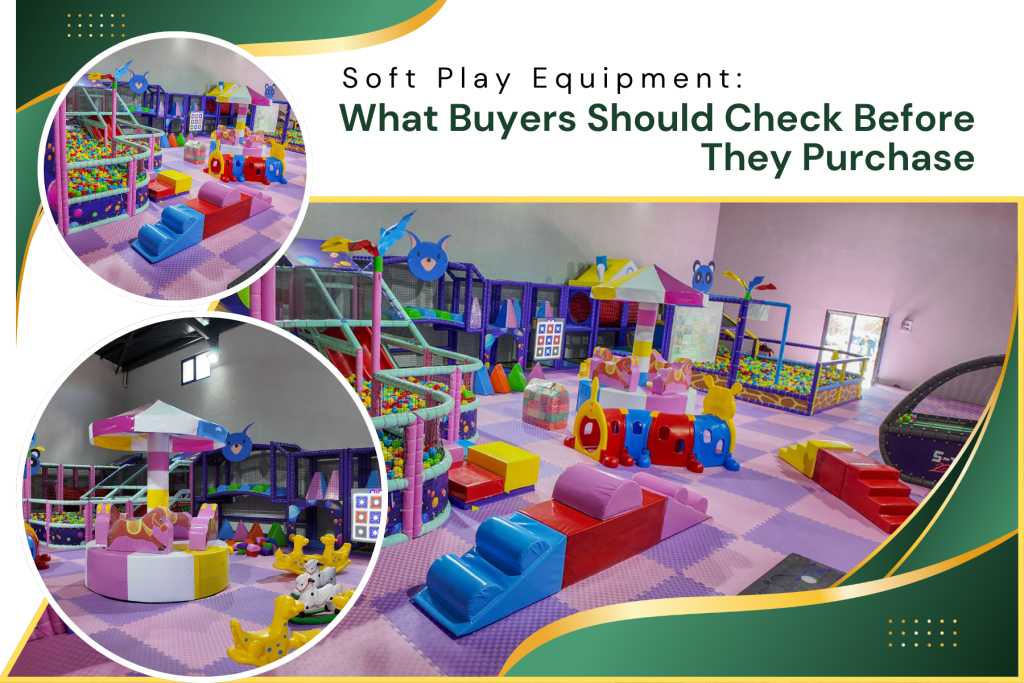
Soft play equipment looks simple at first glance, but in a commercial venue it behaves like a high-traffic system. Kids climb, slide, and crawl for hours. Staff clean surfaces daily. Parents judge hygiene and safety instantly. If soft play equipment is poorly planned or weakly finished, it wears fast and becomes difficult to operate.

Soft Play Equipment Planning That Fits Your Space

Soft play equipment should be designed around your building, not forced into it. Ceiling height, columns, exits, sprinkler lines, lighting, and reception flow all influence what works safely.

A good layout starts with clear answers to:
Which age groups you want to serve
How many children you expect at peak hours
Where parents will sit and what they should see
How you will manage entry control and supervision

When these are planned early, the venue feels organized and easier to manage.

Layout and Flow That Works on Busy Days

Many soft play areas look great and still feel chaotic because flow was not considered. Bottlenecks near slides, tight crossings, and dead ends create collisions and stress.

Good soft play equipment layout usually includes:
Smooth circulation with fewer choke points
Clear routes that reduce backtracking
Safe transitions near slide exits and stair entries
Defined areas that help children spread out naturally

A calm flow improves guest satisfaction and helps staff supervision.

Zoning for Toddlers and Mixed Ages

One of the most common operational problems is mixing toddlers into faster play routes. Toddlers need lower heights, softer pacing, and protected access. Older kids want challenge and speed.

Smart zoning keeps these needs balanced. Toddlers should have clear entry points and a protected area. Older children should have a separate challenge path so the venue feels exciting without creating constant conflict.

Safety Details You Can Inspect – Soft play equipment

Soft play equipment should reflect recognized safety expectations, often referenced under EN and ASTM. Beyond labels, focus on visible design decisions.

Check these areas carefully:
Protected corners and stable platform edges
Clean junction points that do not create snag risks
Controlled gaps and reduced pinch points
Safe landings at slide exits
Barrier and net placement that matches the play height

A supplier who can explain these points clearly is usually a safer partner.

Materials, Hygiene, and Long-Term Appearance

Parents notice cleanliness first. Soft play equipment should be easy to wipe down and resistant to daily cleaning routines. Finishing details matter more than buyers expect.

Look for:
Easy-to-clean surfaces with neat seam finishing
Reinforced high-wear zones like steps and entrances
Consistent finishing quality across the full structure
Modular parts that can be replaced quickly when needed

A venue that stays fresh-looking earns trust and repeat visits.

Maintenance and Serviceability – Soft play equipment

Ask what typically wears first and how it is serviced. High-contact zones will need attention over time. Good soft play equipment is designed so maintenance is fast and does not require dismantling large sections.

A practical approach includes a spare parts plan, clear access points, and support that helps you keep downtime low.

Installation Readiness and Support

Installation quality matters. Even the best equipment can become risky if it is installed poorly. Look for clear drawings, organized packaging, labeling for assembly sequence, and realistic installation planning.

Good handover includes basic maintenance guidance and a clear support process if issues appear after opening.

Why Many Buyers Review Antalya Park

Buyers often compare suppliers by looking at real project references and delivery consistency. Antalya Park is often reviewed because catalogs and completed project examples help investors evaluate real installations, finishing quality, and overall scope.

Indoor Playground Manufacturer: How to Build a Venue Families Trust

Choosing an Indoor Playground Manufacturer is not just a design decision. It is an operational decision that affects safety, cleanliness, staffing, parent comfort, and how well the venue performs on busy days. Many indoor play areas look impressive in visuals, then feel chaotic in real life because flow, zoning, and serviceability were not planned with daily traffic in mind.

If you are building a family entertainment center, a mall play zone, a hotel kids club, or an indoor park, this guide will help you evaluate an Indoor Playground Manufacturer the same way experienced buyers do.

Indoor Playground Manufacturer Planning That Fits Your Building

A professional Indoor Playground Manufacturer should start with your building, not a preset package. Indoor venues have real constraints that directly shape safety and guest flow. Ceiling height, columns, emergency exits, sprinkler lines, HVAC, lighting, and reception placement all influence what works.

A strong planning process usually includes a clear review of your target age range, expected capacity, and how you will handle peak-hour traffic. The best manufacturers ask operational questions early because the answers change everything. A venue built for toddlers and families needs different pacing and supervision points than a venue targeting older kids.

Indoor Playground Manufacturer Zoning for Toddlers and Older Kids

Zoning is one of the biggest performance factors in indoor projects. Toddlers need protected access, lower heights, softer pacing, and fewer fast crossings. Older children want challenge and speed, but they also create higher movement intensity. Mixing those routes without clear separation is a recipe for stress and complaints.

A well-designed layout makes the zones feel connected while still being clearly defined. Parents should understand the logic instantly, and staff should not need to constantly redirect traffic.

Layout That Stays Calm on Busy Days

The difference between a fun venue and a stressful one is often layout flow. When a play area is crowded, small design mistakes become big problems. Narrow crossings, dead ends, and unclear routes create bottlenecks. Bottlenecks increase collisions, reduce supervision control, and make parents feel uneasy.

A strong layout feels intuitive. Kids naturally move forward instead of backtracking, and the highest-energy points are placed where staff can monitor them easily. A venue that stays calm when busy tends to keep families longer, which supports revenue and repeat visits.

Parent Sightlines and Seating Strategy

Parents rarely say it directly, but visibility is one of the biggest reasons they decide to return. If seating is placed where parents can see key areas, the whole venue feels safer and more comfortable. If parents have to stand, chase sightlines, or move constantly, the experience becomes tiring.

Good indoor play planning treats seating as part of the safety and comfort system, not an afterthought.

Safety Details You Can Actually Verify

A reliable Indoor Playground Manufacturer designs with recognized safety expectations in mind, often referenced under EN and ASTM. What matters most is how safety shows up in the details and whether the manufacturer can explain their decisions clearly.

Look closely at slide exits, stair entries, platform edges, junction points, and high-contact corners. Ask how fall heights are handled and how landing zones are planned. Ask how gaps are controlled and how pinch risks are reduced. These are practical, visible decisions that separate a thoughtful build from a risky one.

Documentation also matters. Clear drawings, installation guidance, and inspection-ready documentation reduce mistakes during assembly and help the system stay consistent over time.

Indoor Playground Manufacturer Materials for Hygiene and Durability

Indoor play areas live in a world of friction and cleaning. Parents notice cleanliness immediately, and staff need surfaces that can be cleaned efficiently without damaging the look of the product.

A strong Indoor Playground Manufacturer plans for:
Easy-to-clean surfaces and clean finishing in seams and joins
Reinforced high-wear points like steps, entrances, and landings
Replaceable modular parts that reduce downtime during repairs
Consistent finishing quality that keeps the venue looking premium

The goal is not just durability. It is durability that stays attractive. A venue that looks fresh after months of traffic earns trust and stronger reviews.

Installation and Handover That Prevent Surprises

Even the best design can underperform if installation is rushed or unclear. A good project feels predictable on site because the manufacturer supports a structured build process.

You should expect clear drawings, organized packaging, labeling that supports correct assembly sequence, and a realistic installation timeline. Handover should include a clean overview of operational notes, basic maintenance guidance, and a clear process for support requests after opening.

When installation is planned well, you open faster and you avoid the small mistakes that turn into long-term maintenance issues.

Indoor Playground Manufacturer After-Sales Support That Protects Uptime

After opening, uptime becomes everything. Closed sections do not just reduce revenue, they reduce trust. A professional Indoor Playground Manufacturer should have a clear after-sales process, including spare parts support and practical technical follow-up.

Spare Parts and Uptime Planning

Ask what typically wears first in the first year and what should be stocked locally. The best manufacturers do not promise zero maintenance. They provide a realistic plan that keeps downtime low and makes repairs straightforward.

A Practical Reference Many Buyers Review

Many investors compare manufacturers by looking at planning quality, production consistency, and real project references. Antalya Park is often reviewed in this context because buyers can evaluate catalogs and completed project examples to understand finishing quality and delivery capability in real venues.

Soft Play Manufacturer: How to Build an Indoor Play Area That Looks Premium and Runs Smoothly

Choosing a Soft Play Manufacturer is a decision you feel every single day after opening. Soft play is not a one-time purchase that sits quietly in a corner. It takes constant use, daily cleaning, and nonstop attention from parents. If the layout is confusing, staff struggle. If materials wear quickly, the venue looks tired. If maintenance is difficult, downtime grows and reviews suffer.

A strong Soft Play Manufacturer helps you build a play area that feels safe, stays clean, and keeps families coming back. This article explains what to look for and how to evaluate a manufacturer like a buyer who cares about long-term performance.

Soft Play Manufacturer Planning That Starts With Real Venue Operation

A professional Soft Play Manufacturer should begin with your venue reality, not a fixed package. Your building and your business model decide what works.

The manufacturer should ask about ceiling height, columns, exits, sprinkler lines, HVAC, lighting, and reception placement. Just as important, they should ask about how you plan to operate. Are you focused on toddlers, mixed ages, or older kids too. Do you plan to host parties and school groups. What does peak hour traffic look like.

When planning starts with these answers, the final design feels organized, easy to supervise, and comfortable for parents.

Soft Play Manufacturer Layout Decisions That Reduce Chaos

Many soft play areas look impressive but become stressful on weekends. The issue is often flow. Children run toward the same points, parents gather in the wrong places, and staff lose clear control.

A strong Soft Play Manufacturer plans flow by designing clear routes, avoiding tight bottlenecks, and controlling transitions near slides, stair entries, and crossings. The goal is simple. Kids should move naturally, and staff should be able to supervise without constantly stepping into the structure.

Soft Play Manufacturer Zoning That Keeps Toddlers Safe and Older Kids Engaged

Zoning is one of the biggest performance factors in commercial soft play. Toddlers need protected access, lower heights, and softer pacing. Older kids want challenge, speed, and variety. When these groups collide in the same pathways, incidents increase and parent trust drops.

A capable Soft Play Manufacturer builds zones that feel connected but clearly separated. Parents should understand instantly where toddlers belong, and older kids should have their own challenge path. The best designs do this without making the venue feel divided or awkward.

Soft Play Manufacturer Design for Parent Comfort and Visibility

Parents do not only care about fun. They care about visibility and control. A professional Soft Play Manufacturer plans sightlines so key areas are visible from seating. That reduces stress, improves perceived safety, and increases the time families stay in the venue.

Comfort matters too. If the layout forces parents to stand or move constantly to track their children, the venue feels tiring. A well-planned seating and visibility approach supports longer visits and better reviews.

Soft Play Manufacturer Safety Thinking That Shows Up in the Details

A reliable Soft Play Manufacturer designs with recognized safety expectations in mind, often referenced under EN and ASTM. The most important part is not the claim. It is whether safety is obvious in the small decisions.

Look closely at corners, platform edges, junction points, and slide exits. Ask how fall heights are planned and how landings are managed. Ask how gaps are controlled and how pinch risks are prevented. Ask for clear installation documentation and inspection readiness.

Strong manufacturers can explain these points clearly, in practical language, without hiding behind vague statements.

Materials That Support Hygiene and Long Term Appearance

In commercial indoor play, hygiene is a business advantage. Parents judge cleanliness immediately. A venue that looks easy to clean feels safer. A venue that looks worn feels risky, even if it is technically safe.

A professional Soft Play Manufacturer plans materials and finishing for daily cleaning and constant use. That includes easy-to-clean surfaces, strong seam finishing, reinforced high-wear areas like steps and entrances, and consistent finishing quality across the entire structure.

Serviceability matters as much as durability. When a component needs attention, you want a design that allows fast replacement without shutting down a large section. The best manufacturers plan modular replacement logic from the beginning.

Maintenance Planning That Protects Uptime

Ask a simple question that reveals a lot. What typically needs attention after the first year of operation, and how fast can it be serviced. A serious Soft Play Manufacturer will not promise zero maintenance. They will explain wear points honestly and help you plan spare parts and service routines that keep downtime low.

Uptime is not only revenue. It is reputation. Parents notice when sections are closed, and they remember it.

Soft Play Manufacturer Installation Support and After Sales Service

Even great equipment can underperform if installation is rushed or unclear. A strong Soft Play Manufacturer provides clear drawings, structured packaging and labeling, and realistic installation planning. This protects your opening schedule and reduces on-site surprises.

After-sales support is where you learn if you chose a real partner. Ask about response time, spare parts availability, and how technical support works after opening. When support is fast and structured, small issues stay small.

Why Many Buyers Review Antalya Park as a Soft Play Manufacturer

Buyers usually compare manufacturers by planning quality, production consistency, and real project proof. Antalya Park is often reviewed because it supports projects from design to production and installation readiness, with a focus on commercial performance. For a support site, directing readers to catalogs and completed project references helps them evaluate real installations and finishing quality.

Final Checklist Before You Decide

A Soft Play Manufacturer is usually a strong candidate when they start with your floor plan, design for flow and visibility, explain safety decisions clearly, plan materials for hygiene and durability, provide structured installation support, and back the project with real after-sales service. When those pieces are strong, the play area becomes a reliable asset instead of a constant maintenance story.

Meta Description
Soft Play Manufacturer guide for buyers: learn how to evaluate layout flow, safety planning, hygiene-ready materials, installation support, and long-term durability for indoor venues.

Soft Play Supplier: How to Choose the Right Partner for a Safe, Clean, High-Performing Play Area

Choosing a Soft Play Supplier is more than picking a design that looks fun. In a commercial venue, soft play is used every day, cleaned constantly, and judged quickly by parents. If the supplier delivers a weak layout, inconsistent finishing, or poor after-sales support, the venue will feel stressful during peak hours and expensive to maintain.

This guide explains what buyers should evaluate when selecting a Soft Play Supplier for indoor parks, family entertainment centers, mall play zones, and hotel kids areas.

Soft Play Supplier vs Soft Play Manufacturer: Know the Difference

Some companies act as a Soft Play Manufacturer by sourcing components from different factories and bundling a package. Others are manufacturers with full control over design and production. Both models can work, but it changes what you should check.

A supplier with direct production control usually provides better consistency, easier spare parts support, and clearer responsibility if something needs replacement. A supplier working with multiple sources may face compatibility issues later.

Before you commit, confirm:
Who produces the main structure and key components
Who owns the design files and specifications
Who is responsible for spare parts and after-sales support
How replacements are handled after installation

Clear answers here protect your investment.

Planning Should Start With Your Venue

A professional Soft Play Supplier should request your floor plan and understand your operation early. Indoor venues have real constraints: ceiling height, columns, emergency exits, sprinkler lines, HVAC, lighting, and reception placement all shape the design.

The supplier should also ask about:
Your target age groups and expected daily capacity
Peak-hour flow and staffing model
Party rooms, seating visibility, and entry control
Your goal for toddler separation and mixed-age operation

If these questions are missing, the design may look good in a render but perform poorly in real life.

Soft Play Supplier Layout Quality Is the Core of Success

Soft play works best when children move naturally without constant collisions and bottlenecks. A strong Soft Play Supplier designs for flow and supervision, not only feature count.

Look for layouts that include:
Clear separation between toddlers and older kids
Smooth circulation with fewer dead ends
Safe transitions near slides, stairs, and crossings
Visibility for staff and parents without blind spots
Balanced pacing with both active and calmer areas

A good layout increases dwell time and repeat visits because families feel comfortable staying longer.

Soft Play Supplier Zoning That Keeps Toddlers Safe

Toddlers need protected access, lower height, and softer pacing. Older kids need more challenge and faster movement. A capable Soft Play Supplier can separate these groups naturally while keeping the venue feeling connected.

Check where toddler entry begins, how crossings are controlled, and whether parents can quickly understand which zones match each age group.

Safety and Documentation

A reliable Soft Play Supplier designs with recognized safety expectations in mind, often referenced under EN and ASTM. What matters is whether safety decisions are clearly explained and supported with documentation.

Ask how they handle:
Fall height planning and landing zones
Protected corners, edges, and junction points
Gap and pinch point prevention
Netting and barrier placement
Installation drawings and inspection readiness

If a supplier cannot explain these topics in plain language, treat it as a risk.

Soft Play Supplier Materials, Hygiene, and Long-Term Appearance

Parents notice cleanliness immediately. Soft play also takes friction and daily cleaning routines, so materials and finishing matter more than most buyers expect.

A professional Soft Play Supplier plans for:
Easy-to-clean surfaces and neat seam finishing
Reinforced high-wear zones like steps and entrances
Replaceable modular parts for faster service
Consistent finishing quality across the entire structure

A venue that stays fresh-looking builds trust. Trust becomes repeat visits.

Maintenance Planning That Protects Uptime

Ask what typically wears first after opening and how quickly it can be replaced. The best suppliers do not promise zero maintenance. They provide a realistic maintenance plan and a spare parts strategy that keeps downtime low.

Soft Play Supplier Installation Support and After-Sales Service

Even good equipment can become a problem if installation is rushed. A strong Soft Play Supplier provides clear drawings, structured packaging and labeling, and a realistic installation plan.

Before you sign, confirm:
Who installs and what is included
Site preparation requirements
Timeline assumptions and handover documentation
Support process after opening
Spare parts availability and response time

After-sales support protects your revenue because closed zones damage both income and reputation.

A Practical Supplier Reference Many Buyers Review

If you want a partner that supports design, production, logistics, and installation planning, Antalya Park is one company many investors review for commercial soft play projects. For a support site, it is also useful to guide readers toward catalogs and completed project references so they can evaluate real installations and finishing quality.

Final Checklist Before You Choose a Soft Play Supplier

A strong Soft Play Supplier usually checks these boxes:
They review your floor plan and audience before proposing a design
They design for flow, zoning, and supervision visibility
They explain safety logic clearly and provide documentation
They plan materials for hygiene and long-term durability
They provide strong installation support and after-sales service
They can show real references from comparable venues

Choosing the right Soft Play Supplier helps you build a play area that looks premium, operates smoothly, and stays profitable over time.

Playground Manufacturer: Choosing the Right Partner for a Safe, Memorable, and Profitable Play Space

A playground is not a simple product—it’s a public promise. It must be safe for children, comfortable for families, and reliable for the operator. That’s why selecting the right Playground Manufacturer is one of the most important decisions in any play project. The manufacturer you choose will determine not only how the playground looks on opening day, but how it performs after thousands of hours of real use.

This article explains what a professional playground manufacturer should deliver, why manufacturing quality matters, and how the right partner supports long-term success.


1) A Playground Is a System, Not a Set of Parts

Many buyers focus on slides, colors, and attractive features. But the real value of a playground comes from how everything works together: structure, safety boundaries, circulation flow, materials, and maintenance access.

A strong playground manufacturer designs the space like a living environment:

  • children can move naturally without dangerous congestion,
  • parents can supervise easily,
  • staff can operate and clean without constant struggle,
  • the playground stays stable, tight, and visually fresh over time.

When the system is weak, small issues grow into safety risks and downtime.


2) Safety Engineering Must Come First

Safety is not something you “add later.” A professional playground manufacturer builds safety into every decision:

  • correct clearances and safe transitions between modules
  • strong structural construction and secure fixing points
  • impact protection in high-risk zones
  • reliable padding, netting, and protective surfaces
  • non-toxic material choices and fire-resistant options
  • age-appropriate design (toddler safety is not the same as older kids’ play)

A serious manufacturer can clearly explain how safety is implemented in design, production, and installation—not only in marketing claims.


3) Materials and Durability: The Hidden Difference

Many playgrounds look similar in photos. The difference appears after months of daily use. Durability depends on “invisible” details:

  • foam quality and density
  • PVC strength and stitching quality
  • connector reliability and wear resistance
  • structural stability and long-term tightness
  • easy-clean surfaces that don’t age quickly

A good playground manufacturer builds for real traffic, not showroom display. Better materials reduce repairs, closures, and long-term operating costs.


4) Design That Creates Flow and Repeat Visits

A successful playground keeps children engaged longer. That happens when design has rhythm: discovery, challenge, reward, and variety. A strong manufacturer plans:

  • smooth circulation (fewer bottlenecks and collisions)
  • clear visibility lines for supervision
  • balanced difficulty for different age groups
  • “wow points” that make the space memorable
  • smart zoning that supports both play and operations

Play value drives repeat visits—and repeat visits drive stable revenue.


5) Project Management, Installation, and After-Sales Support

A playground is built twice: first in engineering, then on site. A professional playground manufacturer provides:

  • clear technical drawings and structured approvals
  • disciplined production and quality control
  • organized packaging, shipping, and logistics
  • experienced installation teams
  • final inspection and handover standards

And after opening, support becomes crucial. Playgrounds are living systems that require:

  • daily and periodic inspection routines
  • spare parts availability
  • fast technical response
  • maintenance guidance to prevent downtime

Warranty is helpful, but ongoing support protects your business.


Conclusion

Choosing a Playground Manufacturer is not only about buying equipment—it’s about selecting a long-term partner who understands safety, design flow, durability, installation discipline, and after-sales support.

When the right manufacturer delivers the full system correctly, your playground becomes more than a play area. It becomes a trusted destination for families, a strong brand asset, and a sustainable investment that continues to perform year after year.

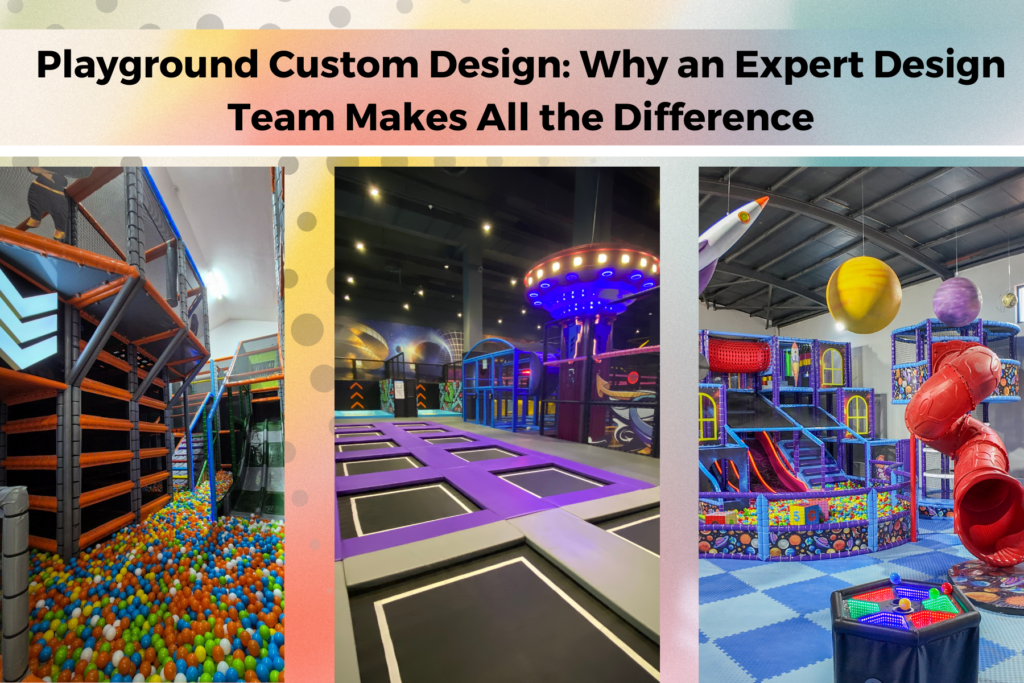
Playground Custom Design: Why an Expert Design Team Makes All the Difference

A playground is never just a collection of colorful modules. Especially in indoor projects, every square meter has a purpose: safety, flow, visibility, excitement, and long-term durability. That’s why playground custom design is one of the most valuable investments you can make—and why working with an experienced Indoor Playground Manufacturer matters far more than simply choosing a catalog model.

Custom design is where a playground becomes a destination.


Custom Design Is Not “Decoration”—It’s Engineering + Experience

The biggest misconception in the market is thinking custom design means “a nicer theme” or “a different color.” In reality, custom design is the process of building a system that fits your venue and your business model.

A professional design team looks at your space and asks the real questions:

  • How will children move through the playground without bottlenecks?
  • Where will parents sit, and what can they see?
  • How do we separate toddlers from older kids without breaking the fun?
  • Where are the structural limits: columns, ceiling height, emergency exits?
  • Which zones generate the strongest play value and longest dwell time?

This is not decoration. This is strategy.


Why Design Team Expertise Changes the Outcome

A skilled design team inside an Indoor Playground Manufacturer does three things at once: protects safety, enhances experience, and supports your revenue.

1) They design play flow, not just shapes

Kids don’t play like adults walk. They loop, return, run, explore, and follow excitement. Expert designers create routes, discovery moments, and “wow points” that keep children engaged longer—without creating crowd pressure.

2) They solve real-world constraints creatively

Every venue has limitations: low ceilings, narrow entrances, columns in the wrong place, emergency route requirements. A strong design team doesn’t fight the space—they use it. Columns become themed towers, tight corners become interactive zones, and height differences become storytelling.

3) They balance age groups correctly

A playground that mixes toddlers and older kids in the same routes becomes stressful fast. An expert team knows how to separate age zones while keeping the venue visually unified—and operationally easy.

4) They design for operations, not just opening day

The best playgrounds are easy to clean, easy to supervise, and easy to maintain. Experienced designers consider cleaning access, high-wear points, serviceability, and how staff will manage entry/exit and rules.


What a Professional Indoor Playground Manufacturer Adds to Custom Design

Choosing an Indoor Playground Manufacturer with an expert design team means you’re not only buying equipment—you’re buying a full process:

  • 3D concept development that fits your brand and audience
  • technical drawings and structured revision management
  • production-ready engineering (so the design can be built exactly as planned)
  • installation planning that protects the design integrity
  • long-term support, spare parts, and maintenance guidance

Custom design is only valuable if it can be produced and installed with precision.


The Real Benefits of Custom Design (For Your Business)

When playground custom design is done correctly, it creates measurable outcomes:

  • higher customer satisfaction and repeat visits
  • longer dwell time (kids stay engaged, parents stay comfortable)
  • fewer bottlenecks and smoother peak-hour operation
  • stronger differentiation from competitors
  • a more “premium” feel that supports pricing and party sales

In a competitive market, “standard” quickly becomes invisible. Custom becomes memorable.


Conclusion

Playground custom design is the difference between an indoor play area that looks good—and one that performs well for years. The key is not only creativity, but expertise: a design team that understands safety engineering, child behavior, venue flow, and operational reality.

That’s why partnering with a capable Indoor Playground Manufacturer is crucial. Because when design is expert-led and system-driven, your playground becomes more than a product—it becomes a brand asset, a repeat-visit engine, and a long-term investment that keeps winning.

Trampoline Area Manufacturer: Building Safe Energy That Turns Into a Strong Business

A trampoline area is one of the fastest ways to inject excitement into a family entertainment venue. It looks simple—jump beds, pads, and nets—but in reality it’s a high-load, high-impact system that must be engineered, installed, and maintained with discipline. That’s why choosing the right Trampoline Area Manufacturer matters: your safety performance, customer trust, and operational stability depend on it.

This article explains what a trampoline area manufacturer should deliver, why trampoline areas work so well as an attraction, and what to evaluate before you invest.


1) What Is a Trampoline Area (and Why It’s Different From a Full Park)?

A trampoline area is typically a focused zone inside a larger venue—such as a soft play center, FEC, mall attraction, or sports facility. Unlike a full trampoline park, it usually has:

  • a smaller footprint,
  • a simpler activity mix,
  • easier supervision and control,
  • faster build and installation timelines.

That makes it a smart upgrade option for venues that want high energy and strong customer appeal without a large-scale expansion.


2) What a Trampoline Area Manufacturer Should Provide

A professional Trampoline Area Manufacturer should deliver a complete, ready-to-operate system—not just components. This includes:

  • custom layout planning to match your venue and traffic flow
  • engineering for frame strength and dynamic load behavior
  • safe transitions and boundaries to reduce collision risk
  • impact protection through correct padding and perimeter design
  • clear installation standards with technical drawings and site process
  • maintenance guidance and after-sales support for long-term stability

A trampoline area is a living system. Strong manufacturers plan for real usage, not only showroom visuals.


3) Safety Engineering: The Non-Negotiable Core

The real challenge of trampoline areas is physics: constant jumping creates dynamic forces that stress frames, beds, connectors, and padding. That’s why safety depends on:

  • structural stability and correct frame construction
  • proper tension distribution in the jump bed system
  • durable padding that stays in place and resists wear
  • strong netting and barrier solutions where required
  • non-toxic, long-lasting, fire-resistant material choices
  • clear zoning to prevent uncontrolled high-speed collisions

A serious manufacturer should be able to explain how the area manages energy and reduces risk.


4) Why Trampoline Areas Are Strong Attraction Points

Trampoline areas perform well as a business feature because they naturally create:

  • high excitement (instant “wow factor”)
  • high repeatability (people improve and want to try again)
  • group value (friends and families enjoy it together)
  • shareable moments (video content and social media exposure)

Even a compact trampoline area can raise the perceived value of your venue and increase dwell time—two factors that often improve overall revenue.


5) Installation Discipline and Long-Term Operation

A trampoline area is built twice: in engineering and on site. Installation quality impacts safety and lifespan. A reliable manufacturer provides:

  • clear drawings and approval workflow,
  • organized packaging and planned logistics,
  • experienced installers,
  • final inspection and structured handover.

Long-term success also depends on maintenance routines. Daily visual checks, periodic inspections, and fast spare parts are not extras—they are revenue protection.


6) Common Mistakes to Avoid

  • choosing by price only
  • copying a design that doesn’t match your traffic flow
  • ignoring age zoning and supervision visibility
  • underestimating maintenance and spare part availability
  • treating installation as basic assembly

Most costly issues come from decisions made at the beginning.


Conclusion

A trampoline area can be a powerful upgrade: it adds energy, increases dwell time, and strengthens the overall attraction of your venue. But success depends on engineering, safety, and long-term support—exactly what a professional Trampoline Area Manufacturer should provide.

When layout, materials, installation, and after-sales service work together, a trampoline area becomes more than a fun zone. It becomes a reliable, repeat-visit feature that supports your brand and your revenue for years.

Establishing an Indoor Playground

Creating a vibrant and safe indoor playground area requires careful planning, especially when selecting the right indoor playground manufacturer. Whether you are a business looking to attract families with young children or a community center aiming to provide a fun and secure space for play, the importance of partnering with a reliable indoor playground supplier cannot be overstated.

Why Choose a Professional Indoor Playground Manufacturer?

When you decide to establish a playground area, one of the first steps is choosing an experienced playground manufacturer. These professionals specialize in designing and building play areas that not only meet safety standards but also inspire creativity and active play among children. By working with an expert indoor playground manufacturer, you can ensure that your play area is tailored to your specific needs, from the types of equipment used to the overall theme and layout.

Benefits of Working with a Trusted Indoor Playground Supplier

  1. Safety First: A reputable indoor playground supplier prioritizes the safety of the children who will use the equipment. They adhere to the latest safety regulations and use high-quality materials that are durable and non-toxic.
  2. Custom Designs: Every play area is unique, and a professional playground manufacturer understands this. They offer custom designs that can transform any space into an engaging and interactive environment, catering to the specific age group of the children who will use it.
  3. Long-term Durability: Indoor playgrounds are a significant investment, so it’s crucial to work with a play area manufacturer who provides equipment built to last. Quality suppliers use robust materials and offer warranties, giving you peace of mind that your playground will endure the wear and tear of daily use.

The Process of Establishing an Indoor Playground Area

Establishing a playground area starts with a clear vision of what you want to achieve. Whether it’s a small corner in a retail store or a large indoor play center, the right playground supplier can help bring your vision to life. The process typically involves:

  1. Consultation and Design: Collaborate with your chosen indoor playground manufacturer to discuss your ideas, space limitations, and budget. They will then provide you with a custom design that meets your requirements.
  2. Installation: Once the design is approved, the playground supplier will handle the installation, ensuring that all equipment is securely and properly set up.
  3. Post-Installation Support: A reliable play area manufacturer offers ongoing support, including maintenance services and updates to keep your playground in top condition.

Conclusion

Investing in a well-designed indoor playground area is an excellent way to attract families and create a welcoming environment for children. By choosing a reputable indoor playground manufacturer, you ensure that your play area is safe, durable, and perfectly suited to the needs of your space. Don’t settle for less when it comes to the safety and enjoyment of the children who will use your playground—partner with a trusted playground supplier to create an indoor play space that will delight and engage for years to come.

A Comprehensive Guide for Success to Establishing an Indoor Playground

In recent years, the demand for indoor playgrounds has soared, driven by the need for safe, weather-independent environments where children can play and explore. If you’re considering entering this burgeoning market, understanding the nuances of indoor playground production and selecting a reliable indoor playground manufacturer or supplier is crucial. This guide will walk you through the key considerations for establishing a successful indoor playground.

Why Choose an Indoor Playground?

Indoor playgrounds offer numerous advantages over outdoor playgrounds, including:

  1. Weather Independence: Indoor playgrounds provide a consistent play environment, free from the constraints of weather.
  2. Safety: Controlled environments mean better safety standards and supervision.
  3. Year-Round Use: Unlike outdoor playgrounds, indoor playgrounds can operate all year round, providing a steady stream of revenue.

Selecting an Indoor Playground Manufacturer

Choosing the right indoor playground manufacturer is a critical step. A reputable manufacturer will offer high-quality equipment, comply with safety standards, and provide support throughout the establishment process. Here are some factors to consider:

  1. Experience and Reputation: Look for manufacturers with a proven track record and positive reviews.
  2. Quality and Safety Standards: Ensure the equipment meets international safety standards.
  3. Customization Options: A good manufacturer will offer customizable designs to fit your specific needs.
  4. Support Services: Comprehensive support, from planning to installation and maintenance, is essential.

Finding an Indoor Playground Supplier

An indoor playground supplier is just as important as the manufacturer. Suppliers often handle the logistics, ensuring timely delivery and installation of the playground equipment. Here’s what to look for in a supplier:

  1. Reliability: Choose a supplier known for timely and efficient delivery.
  2. Product Range: A wide range of products allows for more flexibility in design and functionality.
  3. Customer Service: Excellent customer service can make the process smoother and address any issues promptly.
  4. Installation Services: Many suppliers offer installation services, which can save time and ensure proper setup.

Indoor Playground ProductionConsiderations

The production phase involves detailed planning and execution. Here are the key steps:

  1. Conceptualization: Define the theme, target age group, and specific features of your indoor playground.
  2. Design: Work with designers to create a layout that maximizes space and enhances the play experience.
  3. Production: Ensure the playground equipment is manufactured to the highest standards.
  4. Installation: Proper installation is crucial for safety and functionality. It’s often best to rely on professionals for this step.

Partnering with a Playground Manufacturer

When partnering with a playground manufacturer, communication is key. Clearly outline your vision, requirements, and budget. A good manufacturer will work closely with you to bring your vision to life, offering valuable insights and suggestions along the way.

Conclusion

Establishing an indoor playground can be a rewarding venture, providing a safe and fun environment for children while generating steady revenue. By carefully selecting a reliable indoor playground manufacturer and supplier, and focusing on high-quality production and installation, you can set the foundation for a successful indoor playground. Remember, the key to success lies in meticulous planning, attention to safety, and choosing the right partners to bring your vision to fruition.

By focusing on these critical aspects, you can ensure that your indoor playground not only meets the needs of your young visitors but also stands the test of time, providing joy and entertainment for years to come.

Soft Play Manufacturer Antalya Park’s Innovative Design

Soft play areas are indispensable in creating safe, stimulating environments for children to learn, play, and grow. These versatile spaces foster imagination, physical activity, and social interaction. Choosing the right soft play manufacturer is key to ensuring your play area meets the highest standards of quality, safety, and creativity. Antalya Park stands at the forefront of soft play manufacturing, delivering exceptional solutions tailored to diverse needs.

What Makes a Great Soft Play Manufacturer?

An outstanding soft play manufacturer brings together design innovation, technical expertise, and a commitment to safety. Here’s what to expect from a trusted partner like Antalya Park:

  • Innovative Design: Soft play areas should engage children through creative and dynamic designs. Antalya Park specializes in crafting themed and interactive play zones that captivate young minds.
  • Uncompromised Safety: Safety is paramount in soft play manufacturing. Antalya Park adheres to international standards such as EN and ASTM, ensuring every product is built to protect children during play.
  • Durability and Quality: Our play structures are made from high-quality, non-toxic, and fire-retardant materials, designed to withstand heavy use in busy environments.
  • Customization Options: Whether you’re designing a soft play area for a school, mall, or entertainment center, Antalya Park offers tailored solutions to match your vision and space requirements.

Why Antalya Park is the Preferred Choice for Soft Play Manufacturing

With decades of experience and a portfolio of over 2,000 projects across 65+ countries, Antalya Park has earned its reputation as a global leader in soft play manufacturing. Here’s what sets us apart:

  1. End-to-End Service: From concept creation to installation, we manage every step of your project, ensuring a seamless experience and exceptional results.
  2. Sustainability: We prioritize eco-friendly materials and sustainable manufacturing practices, creating play areas that are as kind to the planet as they are fun for children.
  3. Innovative Features: Our designs integrate advanced technology and creative elements, offering interactive play experiences that stand out.
  4. Proven Expertise: With a deep understanding of global markets, we deliver customized solutions that cater to cultural preferences and business objectives.

Build Your Dream Soft Play Area with Antalya Park

When you choose Antalya Park as your soft play manufacturer, you’re partnering with a company that values quality, innovation, and customer satisfaction. Let us help you create a play area that not only meets but exceeds expectations. Contact us today to start planning your next soft play project and bring your vision to life.