

Soft play equipment looks simple at first glance, but in a commercial venue it behaves like a high-traffic system. Kids climb, slide, and crawl for hours. Staff clean surfaces daily. Parents judge hygiene and safety instantly. If soft play equipment is poorly planned or weakly finished, it wears fast and becomes difficult to operate.
This guide explains what to evaluate when buying soft play equipment for indoor parks, family entertainment centers, mall play zones, and hotel kids areas.
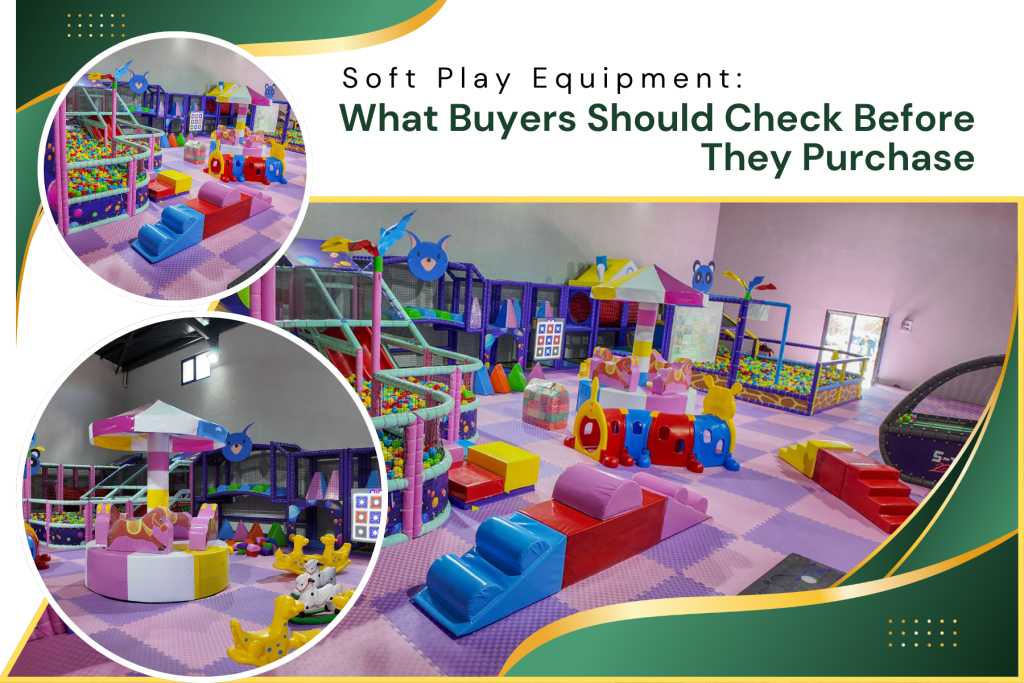
Soft Play Equipment Planning That Fits Your Space
Soft play equipment should be designed around your building, not forced into it. Ceiling height, columns, exits, sprinkler lines, lighting, and reception flow all influence what works safely.
A good layout starts with clear answers to:
Which age groups you want to serve
How many children you expect at peak hours
Where parents will sit and what they should see
How you will manage entry control and supervision
When these are planned early, the venue feels organized and easier to manage.
Layout and Flow That Works on Busy Days
Many soft play areas look great and still feel chaotic because flow was not considered. Bottlenecks near slides, tight crossings, and dead ends create collisions and stress.
Good soft play equipment layout usually includes:
Smooth circulation with fewer choke points
Clear routes that reduce backtracking
Safe transitions near slide exits and stair entries
Defined areas that help children spread out naturally
A calm flow improves guest satisfaction and helps staff supervision.
Zoning for Toddlers and Mixed Ages
One of the most common operational problems is mixing toddlers into faster play routes. Toddlers need lower heights, softer pacing, and protected access. Older kids want challenge and speed.
Smart zoning keeps these needs balanced. Toddlers should have clear entry points and a protected area. Older children should have a separate challenge path so the venue feels exciting without creating constant conflict.
Safety Details You Can Inspect – Soft play equipment
Soft play equipment should reflect recognized safety expectations, often referenced under EN and ASTM. Beyond labels, focus on visible design decisions.
Check these areas carefully:
Protected corners and stable platform edges
Clean junction points that do not create snag risks
Controlled gaps and reduced pinch points
Safe landings at slide exits
Barrier and net placement that matches the play height
A supplier who can explain these points clearly is usually a safer partner.
Materials, Hygiene, and Long-Term Appearance
Parents notice cleanliness first. Soft play equipment should be easy to wipe down and resistant to daily cleaning routines. Finishing details matter more than buyers expect.
Look for:
Easy-to-clean surfaces with neat seam finishing
Reinforced high-wear zones like steps and entrances
Consistent finishing quality across the full structure
Modular parts that can be replaced quickly when needed
A venue that stays fresh-looking earns trust and repeat visits.
Maintenance and Serviceability – Soft play equipment
Ask what typically wears first and how it is serviced. High-contact zones will need attention over time. Good soft play equipment is designed so maintenance is fast and does not require dismantling large sections.
A practical approach includes a spare parts plan, clear access points, and support that helps you keep downtime low.
Installation Readiness and Support
Installation quality matters. Even the best equipment can become risky if it is installed poorly. Look for clear drawings, organized packaging, labeling for assembly sequence, and realistic installation planning.
Good handover includes basic maintenance guidance and a clear support process if issues appear after opening.
Why Many Buyers Review Antalya Park
Buyers often compare suppliers by looking at real project references and delivery consistency. Antalya Park is often reviewed because catalogs and completed project examples help investors evaluate real installations, finishing quality, and overall scope.